Christmas & New Year in Spain and Mexico
A guided comparison with exam-ready Spanish for GCSE.
It is the 24th of December. In Madrid, a family gathers around the table for a long, late dinner; in Mexico City, children break a star-shaped piñata after a candle-lit procession through the streets. Spain and Mexico speak the same language and share the same festivals — but they celebrate la Navidad and el Año Nuevo in wonderfully different ways.
Throughout the article, the useful Spanish words and phrases are highlighted (with their meaning in brackets), so you can “steal” them for your speaking and writing. Tap the on any phrase to hear it.
Spain and Mexico share a language and a religious heritage, so their Christmas and New Year traditions have a lot in common — but there are fascinating differences too. Comparing two cultures like this is exactly the kind of thing that earns top marks at GCSE, because it lets you show cultural knowledge and use clever comparison structures.
Tanto en España como en México, la Navidad es una fiesta muy importante para la familia
In both Spain and Mexico, Christmas is a very important festival for the family
Aunque comparten muchas tradiciones, también existen diferencias interesantes
Although they share many traditions, there are also interesting differences
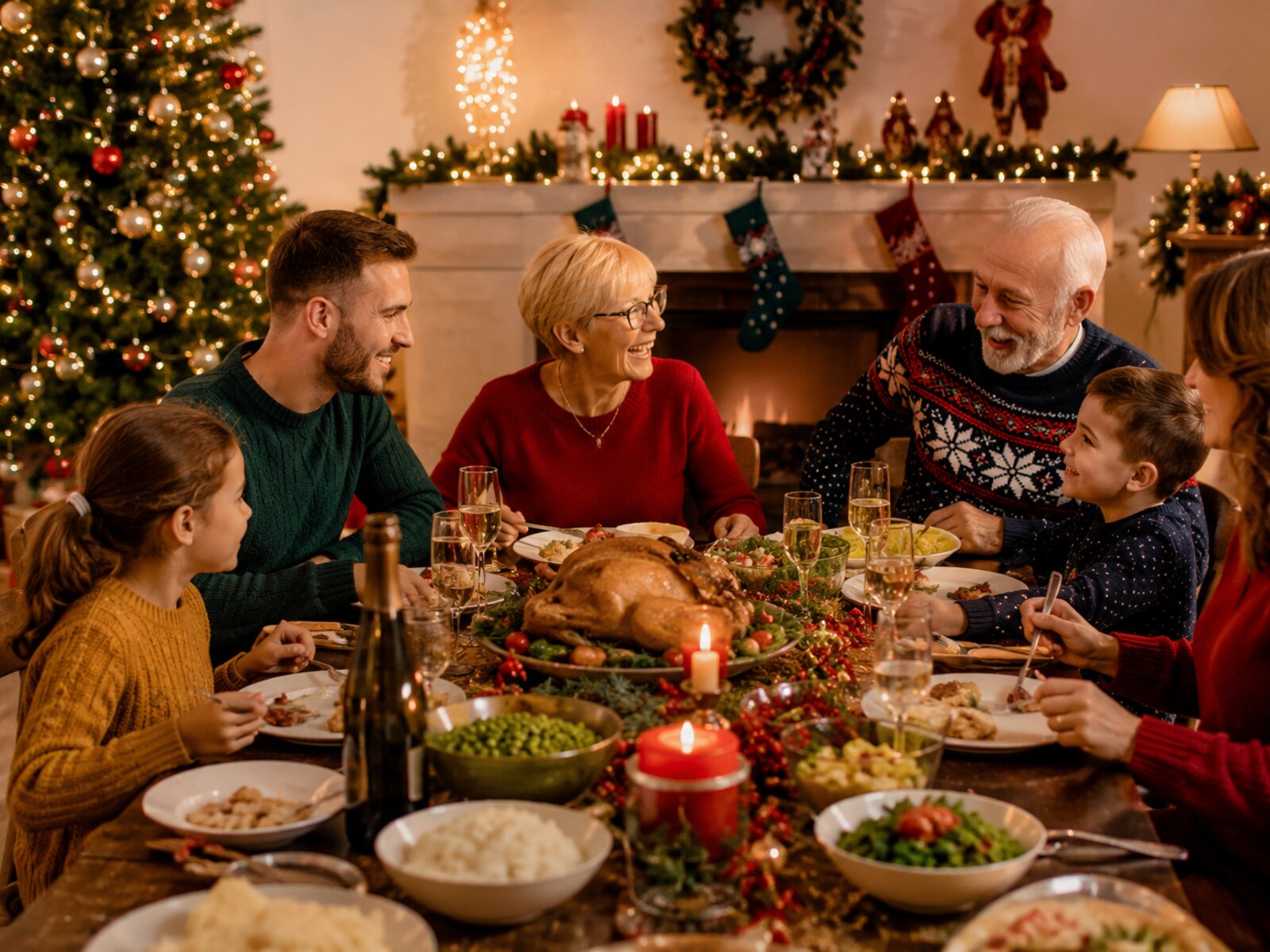
In Spain, the heart of Christmas is la Nochebuena (Christmas Eve) on the 24th of December, when the whole family gathers for a long, late dinner. Homes are decorated with el belén (the nativity scene) rather than only a tree, and people sing los villancicos (Christmas carols) together.
On the 22nd of December, the country stops to watch el sorteo de Navidad (the Christmas lottery), famous for its huge prize nicknamed El Gordo. Typical food includes seafood, roast lamb, and sweets like el turrón (nougat) and los polvorones (crumbly almond biscuits).
En España, la cena más importante es la de Nochebuena, el veinticuatro de diciembre
In Spain, the most important dinner is on Christmas Eve, the 24th of December
Montamos el belén y cantamos villancicos en familia
We set up the nativity scene and sing carols as a family
El veintidós de diciembre mucha gente ve el sorteo de Navidad, conocido como ‘El Gordo’
On the 22nd of December many people watch the Christmas lottery, known as ‘El Gordo’
In Mexico, Christmas begins much earlier with las Posadas (the Posadas), which run for nine nights from the 16th to the 24th of December. Each night, a candle-lit procession re-enacts Mary and Joseph looking for shelter, with people singing from house to house.
Children break a star-shaped la piñata (piñata) (its seven points represent the seven sins) and drink hot fruit punch, el ponche (punch). Families set up el nacimiento (the nativity scene), and the Christmas Eve dinner often features los tamales (tamales), el bacalao (salt cod) and turkey.
En México, las Posadas duran nueve noches, del dieciséis al veinticuatro de diciembre
In Mexico, Las Posadas last nine nights, from the 16th to the 24th of December
Los niños rompen una piñata y beben ponche caliente de frutas
The children break a piñata and drink hot fruit punch
En la cena de Nochebuena se comen tamales, bacalao y pavo
At the Christmas Eve dinner they eat tamales, cod and turkey
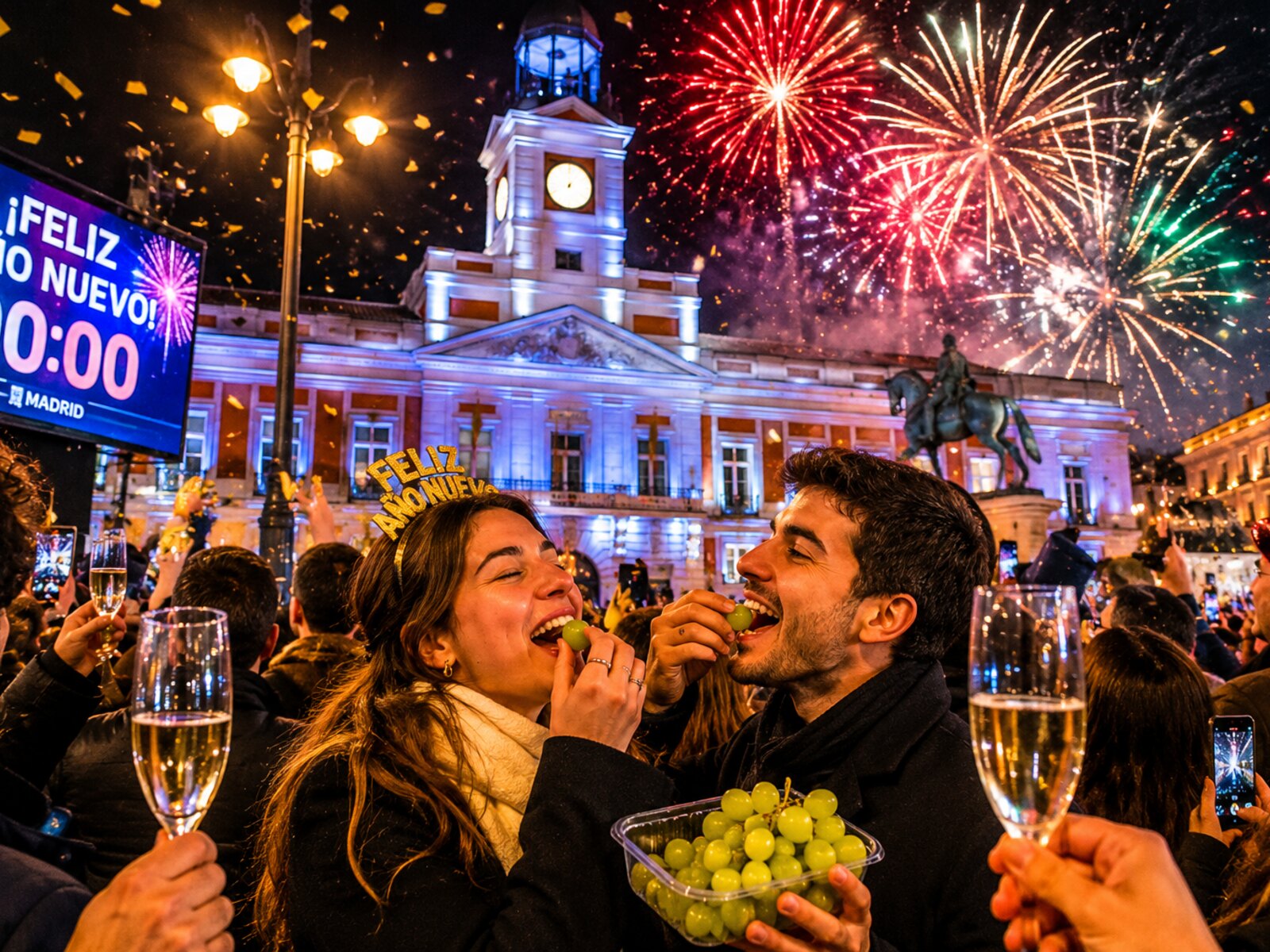
Here the two countries meet again: in both Spain and Mexico, people eat las doce uvas de la suerte (the twelve lucky grapes) at midnight on la Nochevieja (New Year’s Eve), one grape for each chime of the clock, las campanadas (the bell chimes).
In Spain, huge crowds watch the bells live from la Puerta del Sol (the Puerta del Sol) square in Madrid, then toast with el cava (cava (sparkling wine)) at a el cotillón (New Year’s party).
En Nochevieja tomamos las doce uvas de la suerte, una con cada campanada
On New Year’s Eve we eat the twelve lucky grapes, one with each bell chime
En España, mucha gente ve las campanadas desde la Puerta del Sol, en Madrid
In Spain, many people watch the bells from the Puerta del Sol, in Madrid
Después brindamos con cava y deseamos ‘¡Feliz Año Nuevo!’
Afterwards we toast with cava and say ‘Happy New Year!’
Mexico eats the twelve grapes too, but adds several superstitions for good luck. Some people eat las lentejas (lentils) for prosperity, walk around the block carrying una maleta (a suitcase) so they will travel during the year, or wear la ropa interior (underwear) in a special colour — red for love, yellow for money.
En México también se comen doce uvas, pero hay otras tradiciones curiosas
In Mexico they also eat twelve grapes, but there are other curious traditions
Algunos comen lentejas para tener prosperidad y dan una vuelta con una maleta para viajar más
Some eat lentils to have prosperity and walk around with a suitcase to travel more
Es típico llevar ropa interior roja para el amor o amarilla para el dinero
It is typical to wear red underwear for love or yellow for money
In Spain, the biggest gift day is not the 25th of December but the 6th of January, when los Reyes Magos (the Three Kings) bring the presents — they are traditionally more important than Papá Noel (Father Christmas). On the evening of the 5th there is a spectacular la cabalgata (parade) through the streets, throwing sweets to the children.
Both countries eat the ring-shaped el roscón de Reyes (Kings’ cake) (called la rosca de reyes in Mexico), which hides a little figurine inside. In Mexico, whoever finds it must host a party with tamales on the 2nd of February, el Día de la Candelaria (Candlemas).
En España, los Reyes Magos son más importantes que Papá Noel y traen los regalos el seis de enero
In Spain, the Three Kings are more important than Father Christmas and bring the presents on the 6th of January
El cinco de enero hay una cabalgata por las calles y los niños reciben caramelos
On the 5th of January there is a parade through the streets and the children get sweets
Comemos el roscón de Reyes, que lleva una figurita escondida dentro
We eat the Kings’ cake, which has a little figurine hidden inside
To reach the higher grades, link your facts with comparison structures. Here are ready-to-use phrases you can adapt.
Mientras que en España los Reyes Magos traen los regalos, en México también es muy popular Papá Noel
While in Spain the Three Kings bring the gifts, in Mexico Father Christmas is also very popular
En cambio, en México las Posadas son una tradición que no existe en España
On the other hand, in Mexico Las Posadas are a tradition that does not exist in Spain
Ambos países comparten la costumbre de tomar las doce uvas en Nochevieja
Both countries share the custom of eating the twelve grapes on New Year’s Eve
Lo que más me sorprende es que las celebraciones duran muchas semanas en los dos países
What surprises me most is that the celebrations last many weeks in both countries
Personalmente, me gustaría pasar la Navidad en México para ver las Posadas
Personally, I would like to spend Christmas in Mexico to see Las Posadas
Here is a short comparison model answer you could adapt in your speaking or writing exam when asked about festivals:
En España y en México, la Navidad y el Año Nuevo son fiestas muy importantes que giran en torno a la familia y la comida. En España, la cena de Nochebuena es la más importante: montamos el belén, cantamos villancicos y, el seis de enero, los Reyes Magos traen los regalos. En México, en cambio, celebran las Posadas durante nueve noches, los niños rompen piñatas y se comen tamales. Sin embargo, los dos países comparten la costumbre de tomar las doce uvas de la suerte en Nochevieja. Cuando era pequeño, no conocía las tradiciones mexicanas, pero ahora me parecen fascinantes. En el futuro, me gustaría pasar las Navidades en México para vivir las Posadas en persona.
It compares the two countries with en cambio and sin embargo, gives concrete cultural detail, and uses the present, the imperfect (era / conocía) and the conditional (me gustaría) — exactly the range examiners reward.