Lesson 1
Las celebraciones y los festivales.
Festivals, customs and celebrations — the language for talking about how, when and with whom you celebrate, and what these traditions mean to you. Work through the eight steps below: learn the words, read, listen, translate, then practise the photo card, role-play and writing exactly as they appear in the AQA exam.
Refresh your KS3 celebration words.
You met all of these in earlier years. Tap any word to hear it, and check the model sentence to see it in action. These are the building blocks — make sure they're solid before the new GCSE words.
Twenty new GCSE words.
Each card shows the word, its meaning, a model sentence and a tag: F on the AQA list (Foundation & Higher), H Higher only, útil not on AQA's list but very useful for speaking & writing. Tap to listen.
Read, then answer.
Two texts on the same topic — a Foundation text and a tougher Higher text. Read each one, then answer the questions in English underneath. They mark themselves: tap your answer and you'll see straight away if you're right.
Mis fiestas favoritas — Diego
Las tradiciones de mi país — Elena
Listen, then answer.
Press play to hear the passage read aloud, as many times as you need, then answer the English questions. You can reveal the transcript afterwards to check what you heard.
🎧 Native-quality audio. Play it as many times as you need — just like the real exam, where each recording is played twice.
Mi celebración favorita — Marta
Mis fiestas preferidas — Hugo
Translate both ways.
First Spanish → English (reading translation), then English → Spanish (the harder direction, tested in Paper 4). Have a go on paper, then tap to reveal the model answer and compare.
Translate into English
Translate into Spanish
Describe the photo card.
In the speaking exam you get a card with two photos from one theme. You must say at least one thing about each photo, then have a conversation on the topic. Here are two photos about festivals and celebrations and the kind of questions you'll be asked.
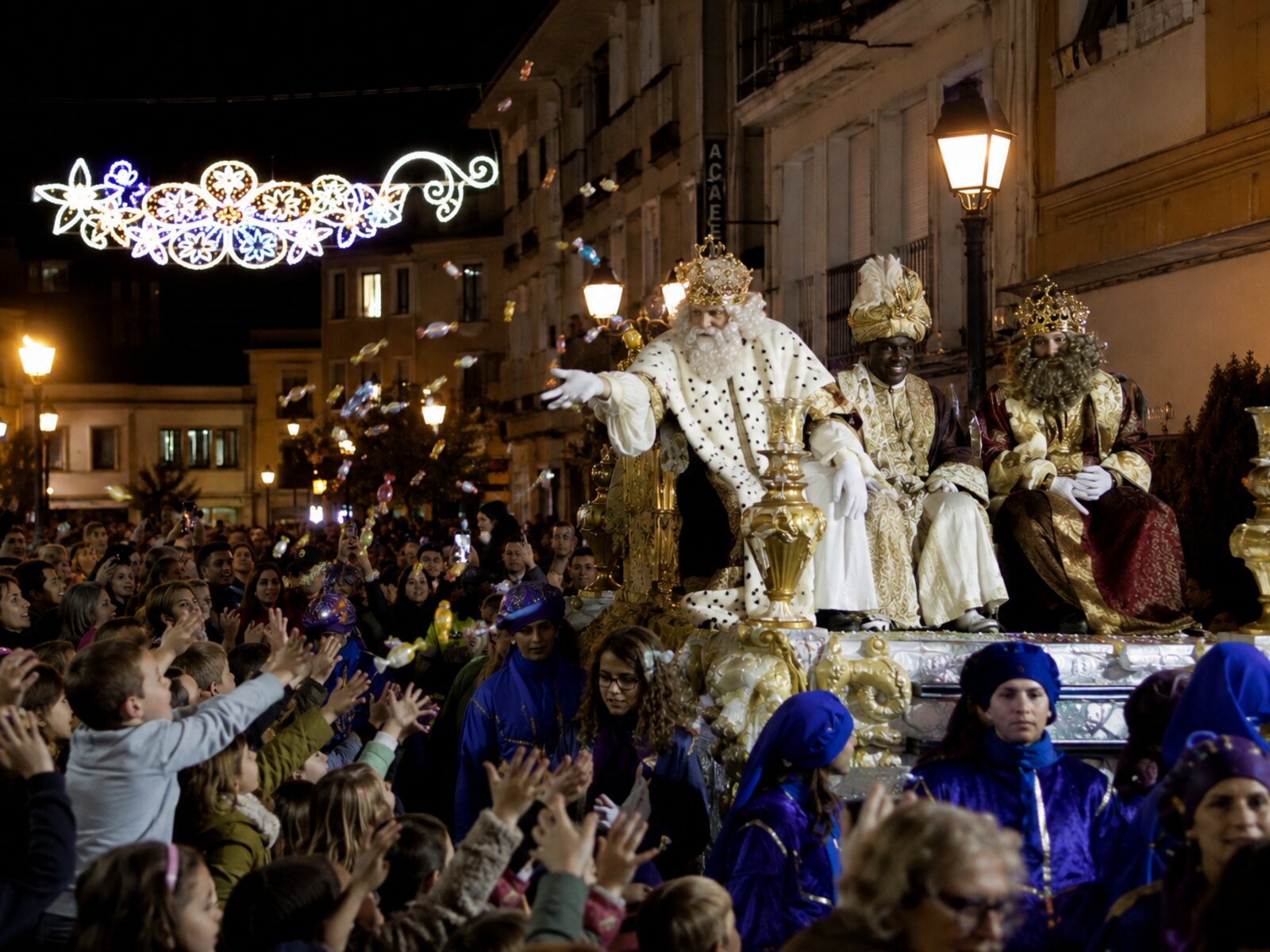
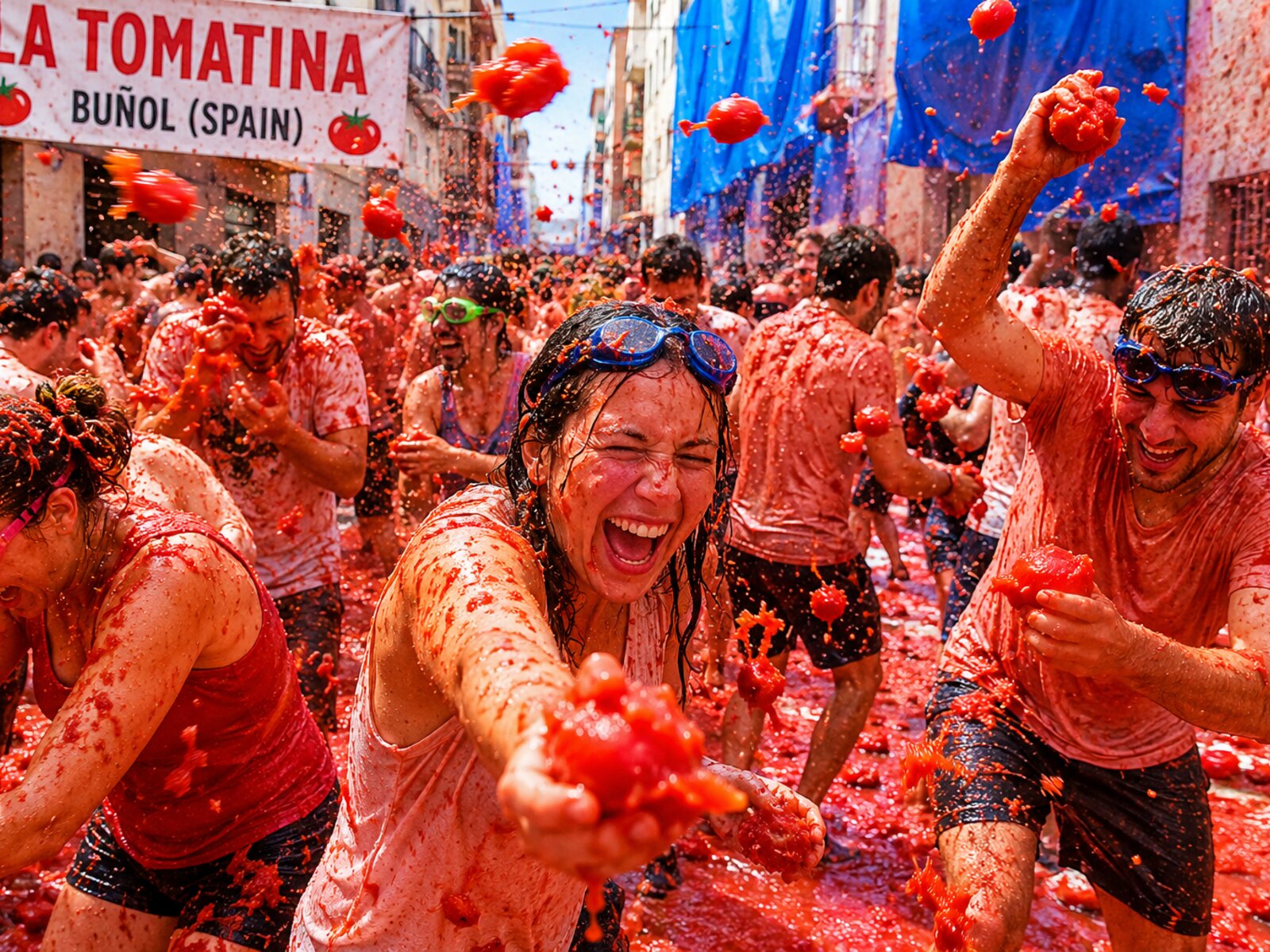
- 1.¿Qué hay en las fotos? Describe la escena. Compulsory
- 2.¿Cuál es tu fiesta o celebración favorita?
- 3.¿Qué haces para celebrarla y con quién?
- 4.¿Son importantes las tradiciones? (opinión + razón)
Describing the photos — model answer
The first question is compulsory: say at least one thing about each photo. Below are two model descriptions you can adapt to whoever is in the picture — tap the speaker to hear them.
Foto A — la cabalgata de los Reyes Magos. En la primera foto se ve la cabalgata de los Reyes Magos por la noche, el cinco de enero. Hay tres reyes en una carroza dorada y mucha gente en la calle. Los niños levantan las manos para coger los caramelos que tiran los reyes. El ambiente es muy alegre y las luces de la calle hacen la escena muy bonita.
In the first photo you can see the Three Kings parade at night, on the fifth of January. There are three kings on a golden float and lots of people in the street. The children are putting their hands up to catch the sweets that the kings are throwing. The atmosphere is very cheerful and the street lights make the scene very beautiful.
Foto B — La Tomatina. En la segunda foto se ve La Tomatina, una fiesta famosa que se celebra en Buñol, en España, el último miércoles de agosto. Miles de personas se tiran tomates en la calle durante una hora. Todos están cubiertos de tomate y se ven muy contentos. Es una fiesta divertida, ruidosa y un poco loca.
In the second photo you can see La Tomatina, a famous festival celebrated in Buñol, in Spain, on the last Wednesday of August. Thousands of people throw tomatoes at each other in the street for an hour. Everyone is covered in tomato and they look very happy. It's a fun, noisy and slightly crazy festival.
Useful vocabulary & phrases
Para empezar: en la primera / segunda foto hay… (there is) · se ve a… (you can see) · unos jóvenes / un grupo de amigos
Las fiestas: la celebración · el desfile · los fuegos artificiales · disfrazarse · el ambiente · reunirse
¿Cómo / cuándo?: por la noche · en la calle · con la familia · celebran · se divierten · lo pasan bien
Opinar (tu turno): mi fiesta favorita es… · me gusta … porque hay muy buen ambiente · las tradiciones son importantes
Then the conversation
- Q2 — your favourite: Mi celebración favorita es la Navidad porque me reúno con toda mi familia.
- Q3 — how & who with: La celebro con mis padres y mis abuelos; comemos juntos e intercambiamos regalos.
- Q4 — opinion + reason (this is where Higher students score): Para mí, las tradiciones son esenciales porque conmemoran nuestra cultura y unen a la gente.
- Higher tier: add a tense — Antes me disfrazaba en Carnaval… (imperfect) or el año que viene me gustaría ver Las Fallas… (conditional) — and an opinion with creo que / pienso que.
The role-play.
The instructions are in English. You must answer the prompts and ask one question (the ! bullet). Try it out loud first, then reveal the model answers.
Your Spanish friend asks you about festivals and celebrations. Your teacher plays your friend.
Model answers & tips
Write your answer.
Two tasks in the real exam style — a Foundation ~50-word task (five bullets) and a Higher ~90-word task (three bullets). Use the sentence starters (tap to drop them into the pad) and the useful vocab, then compare with a model answer.
Mis celebraciones
≈ 50 words · 5 bullets · 10 marksDescribe tu fiesta favorita y cómo la celebras. Menciona los cinco puntos. Escribe aproximadamente 50 palabras en español.
Las fiestas y las tradiciones
≈ 90 words · 3 bullets · 15 marksDescribe las fiestas que celebras, qué hacías antes y qué te gustaría hacer en el futuro. Menciona los tres puntos. Escribe aproximadamente 90 palabras en español.
Foundation answers cover all the bullets with clear, accurate present-tense sentences joined by y, pero and porque, plus at least one opinion. Higher answers do all that and then reach further: more than one tense (e.g. imperfect vivía, near future voy a, conditional me gustaría), opinions with developed reasons, a wider range of connectives (aunque, sin embargo, además) and more ambitious vocabulary. The biggest single lift from Foundation to Higher is justifying opinions and using a second and third tense accurately.