La Fiesta Nacional de la Vendimia
Argentina’s great celebration of the grape harvest in the wine region of Mendoza — a thank-you to the land that ends in a spectacular night of lights, music and dance.
What is La Fiesta Nacional de la Vendimia?
Giving thanks for the harvest
Each March, the province of Mendoza — the heart of Argentine wine country, at the foot of the Andes — celebrates the end of the grape harvest (la vendimia). The festival is, at its core, a thank-you for a successful year in the vineyards.
From blessing to spectacle
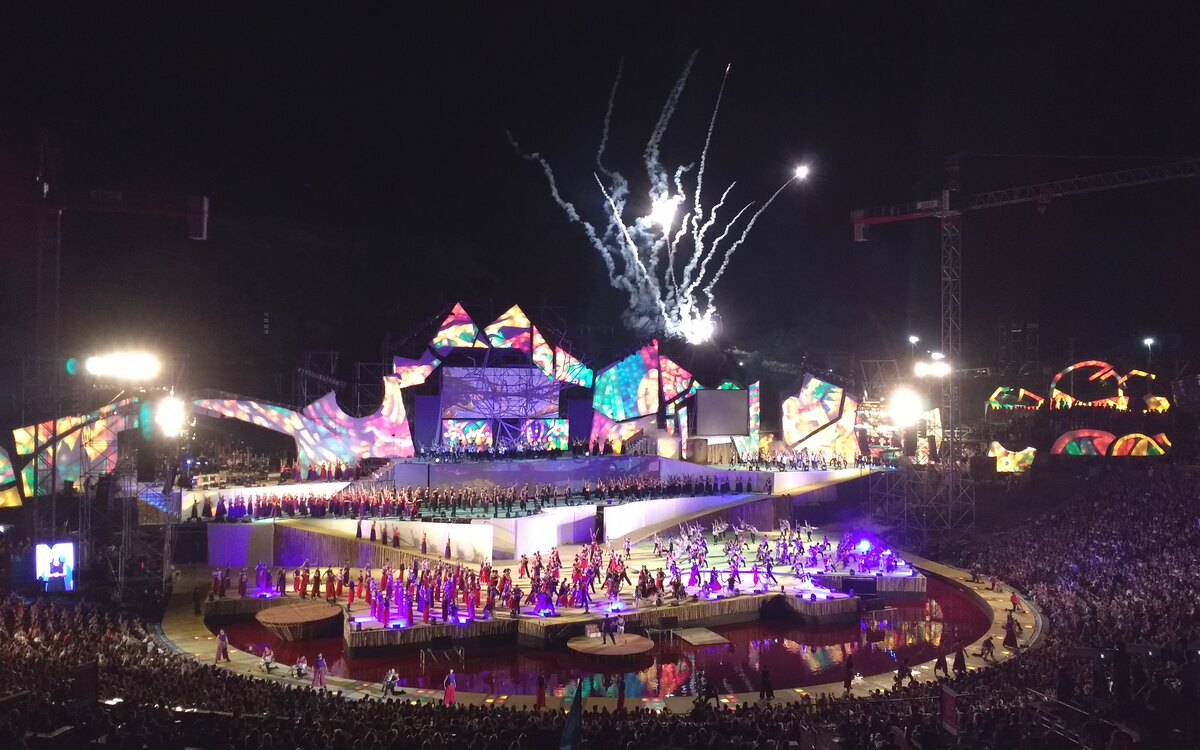
The celebrations include the Bendición de los Frutos (Blessing of the Fruits), parades through the streets, and the crowning of the Reina de la Vendimia (Harvest Queen). It all builds to the Acto Central, a huge night-time show of music, dance and fireworks in a natural amphitheatre.
Wine, work and identity
More than a party, the Vendimia honours the workers and traditions behind one of Argentina’s most famous products — its wine — and has become a proud symbol of regional identity in Mendoza.
“La Vendimia da las gracias por la cosecha y celebra el trabajo de la tierra.”
At a glance
Find it on the map
How to talk & write about it
This festival is perfect for Theme 2: Popular culture (customs, festivals & celebrations). Use it in the photo-card discussion and reading-aloud/conversation (Paper 2) and as a rich example in your ~90-word writing (Paper 4). Here is the language you need.
Key vocabulary
| la vendimia | the grape harvest |
| la cosecha | the harvest |
| el vino / la uva | wine / grape |
| la viña / el viñedo | the vineyard |
| celebrar / agradecer | to celebrate / to give thanks |
| la reina | the queen |
| el desfile | the parade |
| los fuegos artificiales | fireworks |
| el espectáculo | the show |
| la tradición regional | regional tradition |
Model sentences (build up the tenses)
- PresentLa Fiesta de la Vendimia se celebra en Mendoza, en Argentina, en marzo.The Vendimia festival is celebrated in Mendoza, Argentina, in March.
- PresentLa gente celebra la cosecha de la uva con desfiles, música y fuegos artificiales.People celebrate the grape harvest with parades, music and fireworks.
- OpinionCreo que es importante porque agradece el trabajo de la tierra y une a la región.I think it is important because it gives thanks for the work of the land and unites the region.
- PastAntes no conocía esta fiesta, pero ahora me parece muy interesante.I didn’t know about this festival before, but now I find it very interesting.
- FutureMe gustaría viajar a Argentina para ver el espectáculo de la Vendimia.I would like to travel to Argentina to see the Vendimia show.
Structure a strong answer
La Fiesta de la Vendimia se celebra en Mendoza, en Argentina, en marzo.
The Vendimia festival is celebrated in Mendoza, Argentina, in March.
La gente celebra la cosecha de la uva con desfiles, música y fuegos artificiales.
People celebrate the grape harvest with parades, music and fireworks.
Creo que es importante porque agradece el trabajo de la tierra y une a la región.
I think it is important because it gives thanks for the work of the land and unites the region.
Antes no conocía esta fiesta, pero ahora me parece muy interesante. Me gustaría viajar a Argentina para ver el espectáculo de la Vendimia.
I didn’t know about this festival before, but now I find it very interesting. I would like to travel to Argentina to see the Vendimia show.
Examiner tips
- Photo card: start with en la foto hay… / se ve a…, then say what people are doing and wearing, then give an opinion.
- Justify everything: opinions score marks only with a reason — use porque, ya que, creo que, me parece que.
- Show off tenses: for the top bands, add a past (antes… / de pequeño…) and a future/conditional (me gustaría…) to your present-tense description.
- Connectives: link ideas with además, sin embargo, por eso and aunque to sound more natural.