San Fermín
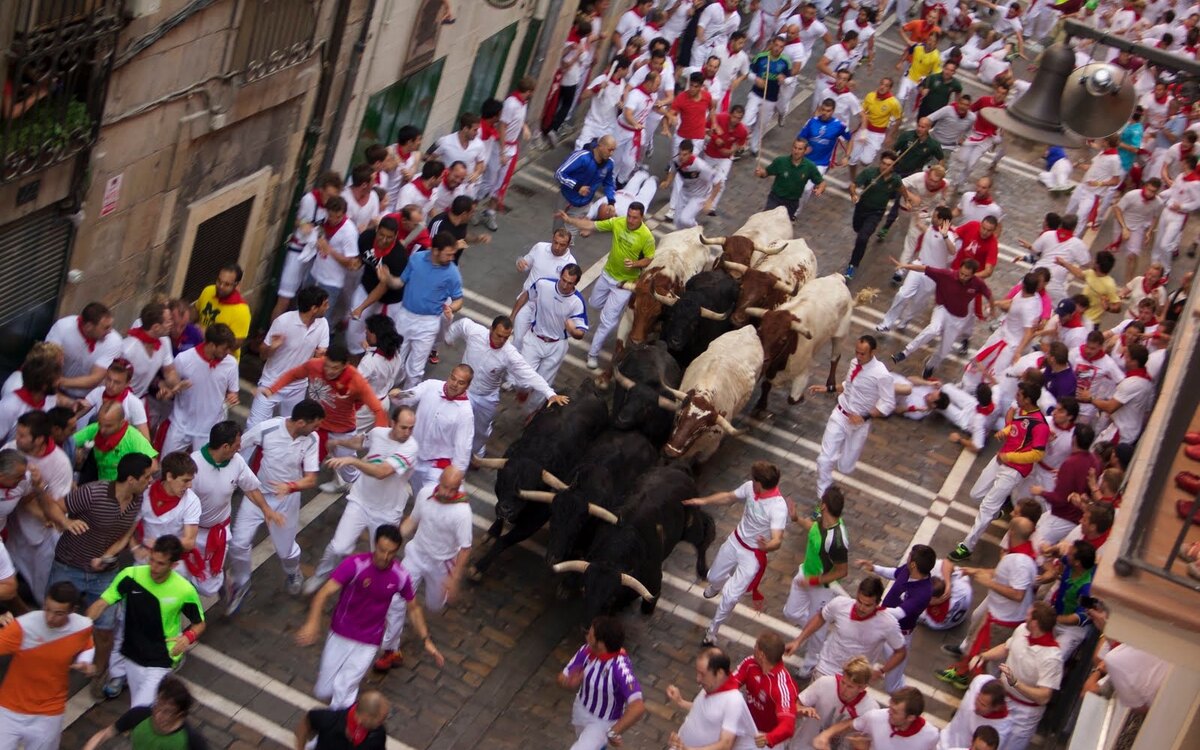
Pamplona's world-famous July festival, where daredevils dressed in white and red run through the streets just ahead of six charging bulls.
What is San Fermín?
Eight days in white and red
From the 6th to the 14th of July, the northern city of Pamplona honours its patron saint, San Fermín. Locals and visitors dress in white with a red scarf (pañuelo) and sash, filling the city with music, dancing and round-the-clock celebration.
El encierro
The festival's most famous — and most controversial — event is the encierro, the ‘running of the bulls’. Each morning at eight o'clock, six fighting bulls are released to charge along a fenced 875-metre route to the bullring, with runners sprinting just ahead of them.
Fame and debate
Made famous worldwide by Ernest Hemingway's novel The Sun Also Rises, San Fermín draws enormous crowds. It is thrilling but genuinely dangerous, and the bull runs are increasingly debated on grounds of safety and animal welfare.
“El encierro es emocionante pero peligroso: correr delante de los toros no es para todos.”
At a glance
Find it on the map
How to talk & write about it
This festival is ideal for Theme 2: Popular culture (Spanish customs & festivals). Use it in the photo-card discussion (Paper 2) and your ~90-word writing (Paper 4).
Key vocabulary — tap a card to hear it
Model sentences (build up the tenses)
- PresentSan Fermín se celebra en Pamplona del seis al catorce de julio.San Fermín is celebrated in Pamplona from the 6th to the 14th of July.
- PresentLa gente lleva ropa blanca y roja y corre delante de los toros.People wear white and red clothes and run in front of the bulls.
- OpinionMe parece emocionante, pero creo que el encierro es demasiado peligroso.I find it exciting, but I think the bull run is too dangerous.
- PastAntes corría casi todo el mundo, pero ahora hay mucho debate sobre los animales.In the past almost everyone ran, but now there is a lot of debate about the animals.
- FutureMe gustaría ver el ambiente de la fiesta, aunque no correría nunca.I would like to see the festival atmosphere, although I would never run.
Structure a strong answer — reveal the models
San Fermín se celebra en Pamplona del seis al catorce de julio.
San Fermín is celebrated in Pamplona from the 6th to the 14th of July.
La gente lleva ropa blanca y roja y corre delante de los toros.
People wear white and red clothes and run in front of the bulls.
Me parece emocionante, pero creo que el encierro es demasiado peligroso.
I find it exciting, but I think the bull run is too dangerous.
Antes corría casi todo el mundo, pero ahora hay mucho debate sobre los animales. Me gustaría ver el ambiente de la fiesta, aunque no correría nunca.
In the past almost everyone ran, but now there is a lot of debate about the animals. I would like to see the festival atmosphere, although I would never run.
Examiner tips
- Photo card: open with en la foto hay… / se ve a…, then say what people do and wear, then give an opinion.
- Justify everything: use porque, ya que, creo que, me parece que.
- Show off tenses: add a past (antes… / de pequeño…) and a future/conditional (me gustaría…).
- Connectives: además, sin embargo, por eso, aunque.
Test yourself
Four quick questions — tap an answer to check it.
1. In which city is San Fermín celebrated?
2. What colours do people wear?
3. What is the encierro?
4. Which writer made the festival famous?