El Día de los Muertos
Mexico’s joyful festival of remembrance, where families welcome back the spirits of their loved ones with marigolds, candles and the foods they loved in life.
What is El Día de los Muertos?
More than a sad goodbye
Held on the 1st and 2nd of November, the Day of the Dead is not a day of mourning but a warm, colourful reunion. Mexicans believe that once a year the souls of the dead return home, and families prepare a joyful welcome rather than grieving in silence.
The ofrenda
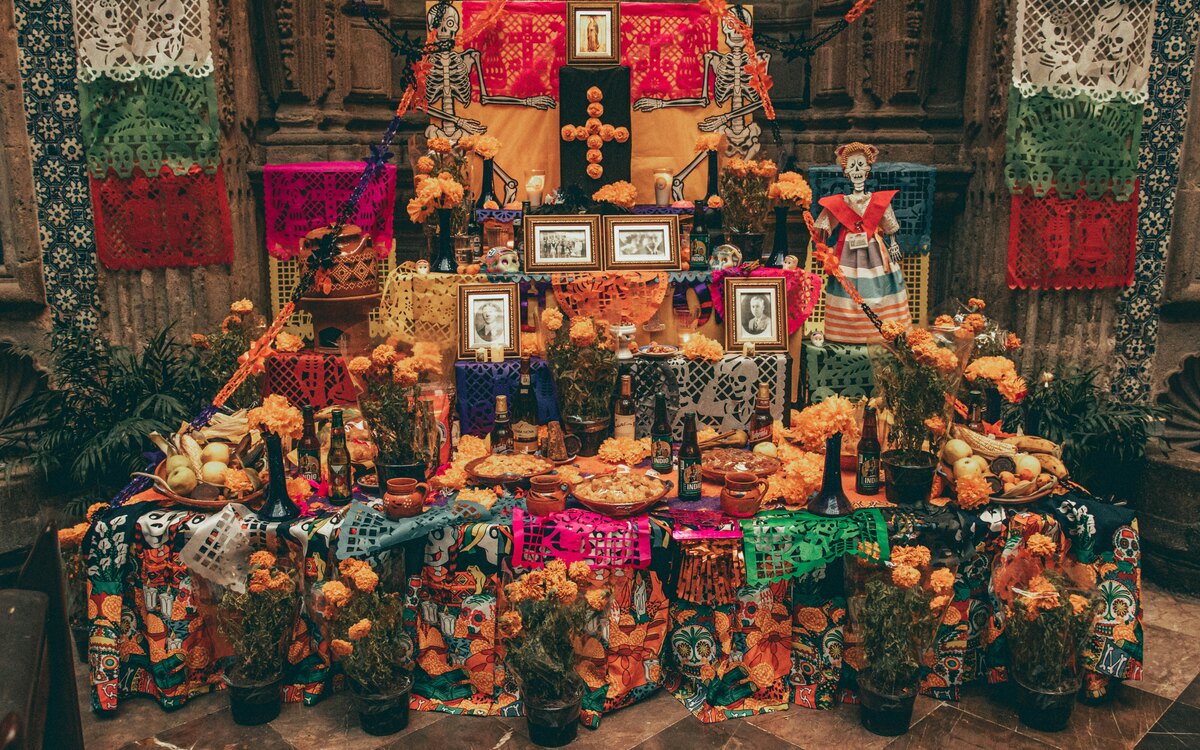
At the heart of the festival is the ofrenda, a home altar decorated with photographs, candles, bright orange marigolds (cempasúchil), sugar skulls (calaveras de azúcar) and pan de muerto (bread of the dead). Families add the food and drink their relatives loved, so their spirits feel welcome.
A UNESCO tradition
Families also gather in cemeteries to clean graves, share stories and play music through the night. Recognised by UNESCO as Intangible Cultural Heritage, the festival blends ancient Aztec beliefs with Catholic traditions — a reminder that, in Mexican culture, death is treated as a natural part of life to be celebrated, not feared.
“No es una fiesta triste, sino una celebración alegre de la vida y la memoria.”
At a glance
Find it on the map
How to talk & write about it
This festival is perfect for Theme 2: Popular culture (customs, festivals & celebrations). Use it in the photo-card discussion and reading-aloud/conversation (Paper 2) and as a rich example in your ~90-word writing (Paper 4). Here is the language you need.
Key vocabulary
| el Día de los Muertos | the Day of the Dead |
| la ofrenda / el altar | the offering / altar |
| la calavera | the skull |
| el difunto / los seres queridos | the deceased / loved ones |
| las flores (el cempasúchil) | flowers (marigolds) |
| honrar | to honour |
| recordar | to remember |
| la vela | candle |
| el pan de muerto | ‘bread of the dead’ |
| alegre / colorido | cheerful / colourful |
Model sentences (build up the tenses)
- PresentEl Día de los Muertos se celebra en México el dos de noviembre.The Day of the Dead is celebrated in Mexico on 2nd November.
- PresentLas familias hacen altares con flores, velas y fotos para recordar a sus difuntos.Families make altars with flowers, candles and photos to remember their deceased.
- OpinionCreo que es una tradición preciosa porque celebra la vida en vez de temer la muerte.I think it is a beautiful tradition because it celebrates life instead of fearing death.
- PastDe pequeño pensaba que era una fiesta triste, pero ahora la entiendo mejor.As a child I thought it was a sad festival, but now I understand it better.
- FutureEl año que viene me gustaría viajar a México para vivir esta fiesta en persona.Next year I would like to travel to Mexico to experience this festival in person.
Structure a strong answer
El Día de los Muertos se celebra en México el dos de noviembre.
The Day of the Dead is celebrated in Mexico on 2nd November.
Las familias hacen altares con flores, velas y fotos para recordar a sus difuntos.
Families make altars with flowers, candles and photos to remember their deceased.
Creo que es una tradición preciosa porque celebra la vida en vez de temer la muerte.
I think it is a beautiful tradition because it celebrates life instead of fearing death.
De pequeño pensaba que era una fiesta triste, pero ahora la entiendo mejor. El año que viene me gustaría viajar a México para vivir esta fiesta en persona.
As a child I thought it was a sad festival, but now I understand it better. Next year I would like to travel to Mexico to experience this festival in person.
Examiner tips
- Photo card: start with en la foto hay… / se ve a…, then say what people are doing and wearing, then give an opinion.
- Justify everything: opinions score marks only with a reason — use porque, ya que, creo que, me parece que.
- Show off tenses: for the top bands, add a past (antes… / de pequeño…) and a future/conditional (me gustaría…) to your present-tense description.
- Connectives: link ideas with además, sin embargo, por eso and aunque to sound more natural.