El Carnaval de Barranquilla
Colombia’s biggest party and one of the largest carnivals on Earth — four days of music, colour and dance on the Caribbean coast before Lent.
What is El Carnaval de Barranquilla?
‘Whoever lives it is who enjoys it’
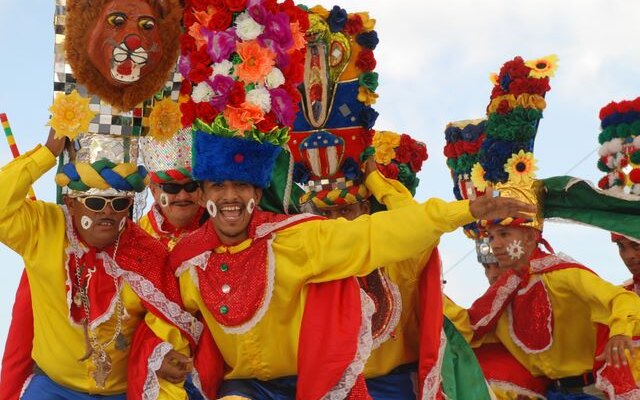
Held in the four days before Ash Wednesday, the Carnaval de Barranquilla brings the whole city to a standstill. Its famous motto — “Quien lo vive, es quien lo goza” — captures the spirit: this is a festival you take part in, not just watch.
A meeting of cultures
The carnival blends European, African and Indigenous traditions into a riot of parades, music and dance. Highlights include the Batalla de Flores (Battle of the Flowers), giant decorated floats (carrozas), and folk dances like the cumbia and the garabato, performed in dazzling costumes.
A symbol of Colombia
Declared a UNESCO Masterpiece of Intangible Cultural Heritage in 2003, the Barranquilla Carnival is a source of enormous pride and a vivid showcase of the diversity of the Colombian Caribbean.
“Quien lo vive, es quien lo goza.” — el lema del Carnaval de Barranquilla.
At a glance
Find it on the map
How to talk & write about it
This festival is perfect for Theme 2: Popular culture (customs, festivals & celebrations). Use it in the photo-card discussion and reading-aloud/conversation (Paper 2) and as a rich example in your ~90-word writing (Paper 4). Here is the language you need.
Key vocabulary
| el carnaval | the carnival |
| la carroza | the float |
| disfrazarse / el disfraz | to dress up / costume |
| el desfile | the parade |
| bailar (la cumbia) | to dance (the cumbia) |
| colorido | colourful |
| el ambiente | the atmosphere |
| la diversidad | diversity |
| la batalla de flores | the battle of the flowers |
| alegre / animado | lively / upbeat |
Model sentences (build up the tenses)
- PresentEl Carnaval de Barranquilla se celebra en Colombia antes de la Cuaresma.The Barranquilla Carnival is celebrated in Colombia before Lent.
- PresentLa gente se disfraza, baila cumbia y desfila con carrozas enormes y coloridas.People dress up, dance cumbia and parade with huge, colourful floats.
- OpinionMe encanta porque el ambiente es muy alegre y refleja la diversidad del país.I love it because the atmosphere is very lively and it reflects the country’s diversity.
- PastAntes solo lo veía por la tele, pero me gustaría vivirlo algún día.I used to only watch it on TV, but I would like to experience it one day.
- FutureEl año que viene me gustaría ir a Colombia para ver el carnaval.Next year I would like to go to Colombia to see the carnival.
Structure a strong answer
El Carnaval de Barranquilla se celebra en Colombia antes de la Cuaresma.
The Barranquilla Carnival is celebrated in Colombia before Lent.
La gente se disfraza, baila cumbia y desfila con carrozas enormes y coloridas.
People dress up, dance cumbia and parade with huge, colourful floats.
Me encanta porque el ambiente es muy alegre y refleja la diversidad del país.
I love it because the atmosphere is very lively and it reflects the country’s diversity.
Antes solo lo veía por la tele, pero me gustaría vivirlo algún día. El año que viene me gustaría ir a Colombia para ver el carnaval.
I used to only watch it on TV, but I would like to experience it one day. Next year I would like to go to Colombia to see the carnival.
Examiner tips
- Photo card: start with en la foto hay… / se ve a…, then say what people are doing and wearing, then give an opinion.
- Justify everything: opinions score marks only with a reason — use porque, ya que, creo que, me parece que.
- Show off tenses: for the top bands, add a past (antes… / de pequeño…) and a future/conditional (me gustaría…) to your present-tense description.
- Connectives: link ideas with además, sin embargo, por eso and aunque to sound more natural.